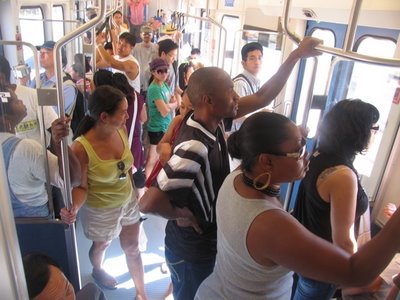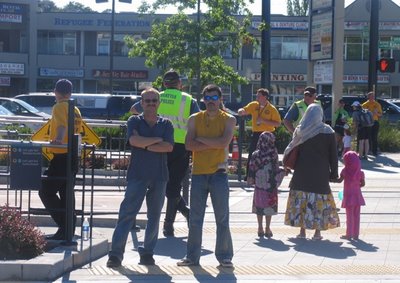
As promised yesterday, here are more images from Link Light Rail’s spectacular opening weekend.
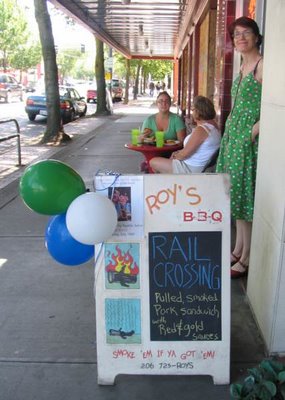
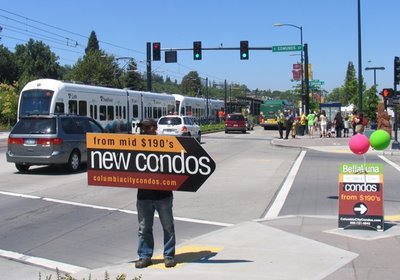
I’m surprised how few people, now and during Link’s years of construction, noted the utter appropriateness of the route’s principal siting on Martin Luther King Jr. Way—formerly Empire Way, named for the “empire builder,” James J. Hill—a railroad tycoon.
Like a lot of Western towns, Seattle was made, and nearly broken, by the railroads. When the Northern Pacific decided to build its own company town (Tacoma) instead of making Seattle its western terminus, Seattle boosters persuaded Hill to bring his rival Great Northern line here. (The NP and GN eventually merged into the Burlington Northern, now BNSF.)
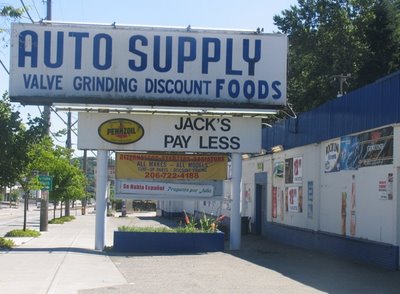
As big rail built Seattle as a center of shipping and industry, local rail built the city’s neighborhoods. In a few cases this was literally true, as developers built trolley lines to service their newly-built tracts.
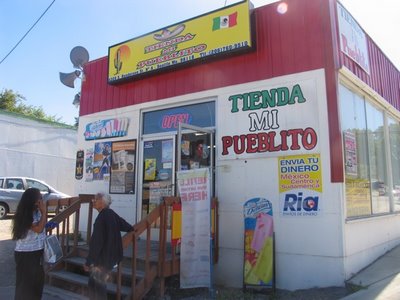

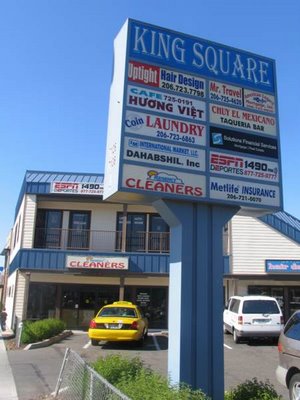
Now, civic planning bureaucrats and “urban density” advocates hope that can happen again.
The operative phrase is “transit oriented development.” You might have read about it in The Stranger or at Publicola.
The idea is that, alongside the shiny new tracks and the trains that run on them, there should be shiny new residences, stores, and commercial structures. These would attract more regular riders for the trains, while bringing new economic activity to these neighborhoods.
(And they’d provide work for the construction biz, Seattle Democrats’ most loyal backers. And they’d help slow the ongoing tilt of the region’s population ratio from the city to the suburbs, a tilt that affects the city’s state and federal funding clout in many ways.)
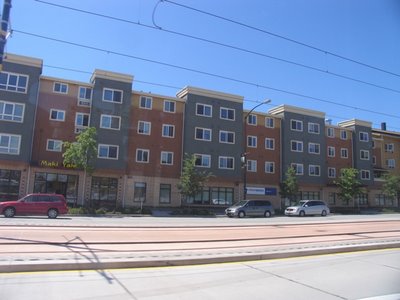
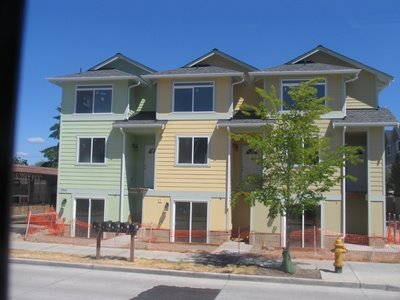
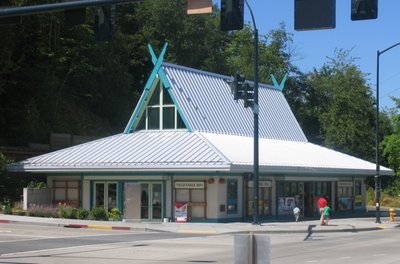
So you get townhomes, neo-rowhouses, senior housing projects with ground-floor retail, midrise apartment/condo structures, and the promise of many more.
Some of these would be on tracts now owned by the city or Sound Transit, which were used as staging areas during Link’s long construction period. (It’s the taxpayers’ bad luck that the project bought this land while prices were going up, and is selling it as prices are going down.)

Of course, people already live and work in these neighborhoods (despite what you might surmise from “urban pioneer” stories in the local lifestyle mags). Light rail’s benefits shouldn’t just be for the new (read: upscale white) residents and workers, or for those current residents who happen to own saleable land.
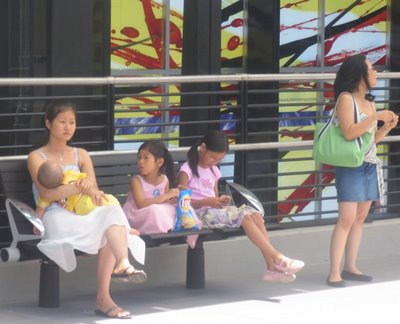
For far too long, Seattle’s entire southeast quadrant (save for the Lake Washington waterfront) has been the city’s ignored stepchild. It’s the first place where halfway houses and social-service agencies get sited, and the last place where fancy shops and restaurants go. It’s got a lot of households that didn’t fare well when the region as a whole boomed, and that aren’t doing well now.
I’d like to see a transit oriented development that enhances the lives of south Seattle’s current populace, and doesn’t merely displace it.